
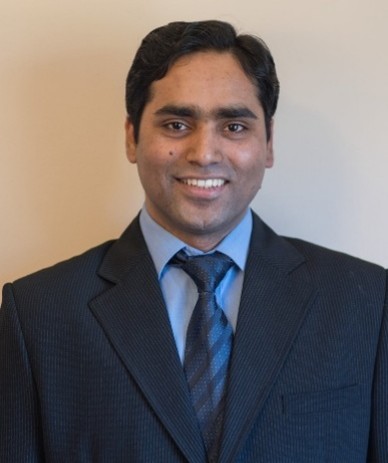
 Assistant Professor, Department of Orthopaedics
Emory Musculoskeletal Institute, Emory University School of Medicine
Research Health Science Specialist, Atlanta VA Medical Center
Could you briefly introduce yourself and your current research focus?
I am an Assistant Professor in the Department of Orthopaedics at Emory University School of Medicine and a Research Health Science Specialist at the Atlanta VA Medical Center. My research focuses on cartilage biology and osteoarthritis (OA), with a particular interest in how failure of the whole-joint microenvironment drives inflammation, pain, degeneration, and impaired repair.
A major focus of my laboratory is joint acidosis and acid-sensing mechanisms in OA. We study how acidic stress within the OA joint regulates chondrocyte responses, macrophage recruitment, inflammatory signaling, senescence, autophagy, and cartilage degeneration. In particular, we are investigating the proton-sensing receptor GPR68 as a molecular link between the acidic joint microenvironment and disease progression. Although my primary research focus is OA and cartilage biology, I view many of these mechanisms as broadly relevant across orthopaedic tissues, including the spine, where inflammation, matrix degeneration, metabolic stress, pain, and failed repair are also central biological challenges.
What inspired you to pursue orthopaedic research?
My interest in orthopaedic research grew from a fascination with how musculoskeletal tissues maintain function for decades despite constant mechanical, inflammatory, and metabolic stress. Cartilage, in particular, is a remarkable tissue because it has limited intrinsic repair capacity, yet it must withstand a highly demanding environment throughout life.
As I progressed through my training, I became increasingly interested in why repair fails in diseases such as OA. I realized that tissue degeneration is not only a problem of cells or matrix alone, but also a problem of the disease microenvironment surrounding them. This thinking led me toward studying the whole-joint environment, including inflammation, metabolic stress, and now joint acidosis. What continues to inspire me is the translational importance of orthopaedic research. Conditions such as OA, cartilage injury, and spine-related degeneration affect mobility, independence, and quality of life for millions of people. Developing better disease-modifying or regenerative approaches requires us to understand the biology of the diseased tissue environment much more deeply.
Can you summarize your one current project and what excites you most about it?
One current project in my lab investigates how joint acidosis regulates OA progression through the acid-sensing receptor GPR68. We have found that the OA joint develops an acidic microenvironment, and we are studying how chondrocytes and other joint cells sense and respond to this change. What excites me most is that this project reframes OA not simply as cartilage wear-and-tear or isolated inflammation, but as a disease involving failure of the whole-joint microenvironment. Within that framework, joint acidosis and acid-sensing pathways may represent underappreciated regulators of inflammation, macrophage recruitment, pain-related biology, and cartilage degeneration. This work also has a translational direction. If we can understand how cells adapt—or fail to adapt—to acidic and inflammatory stress, we may be able to develop therapies that restore tissue homeostasis or improve the performance of regenerative approaches in diseased joints.
Who would you call your mentors or inspirations in the orthopaedic field?
My primary mentor has been Dr. Hicham Drissi, whose guidance has been central to my development as a musculoskeletal scientist. His mentorship has shaped the way I think about translational orthopaedic research — connecting fundamental cartilage biology, osteoarthritis mechanisms, and regenerative medicine with clinically meaningful questions. Working with him has strongly influenced my long-term goal of building a collaborative, mechanism-driven research program that advances disease modification and repair-oriented strategies for joint degeneration.
Beyond my direct mentorship, I have been inspired by many leaders in the orthopaedic, osteoarthritis, cartilage, and spine research communities. Scientists such as Drs. Robert Mauck, Farshid Guilak, Carla Scanzello, Richard Loeser, Anne-Marie Malfait, Martin Lotz, Makarand Risbud, Nidhi Bhutani and Mohit Kapoor have all influenced how I think about musculoskeletal degeneration, inflammation, mechanobiology, pain, and tissue repair. What I admire most about these investigators is not only the quality of their science, but also their ability to build research programs that connect rigorous mechanisms with clinically important problems.
What has been your most meaningful achievement or learning experience so far as an early career investigator?
One of my most meaningful experiences has been developing a research direction around joint acidosis and GPR68 as a new way to understand osteoarthritis biology. Building this program has required integrating several areas—cartilage biology, inflammation, metabolomics, spatial transcriptomics, animal models, and translational therapeutics—which has been both challenging and rewarding.
Another meaningful part of my early career has been mentoring students and helping them develop confidence in research. Seeing trainees ask their own questions, present their work, win awards, or continue into biomedical careers is one of the most satisfying parts of being a faculty member. A major learning experience has been recognizing that building a research program requires more than good experiments. It also requires persistence, communication, collaboration, strategic focus, and the ability to keep moving forward even when experiments or grants do not go as planned.
What do you see as the biggest challenge or open question in your field?
One of the biggest open questions is how different joint microenvironmental stress signals—mechanical injury, matrix degradation products, inflammation, altered metabolism, acidosis, immune-cell activation, and pain pathways—integrate over time to convert an initially adaptive repair response into chronic degeneration.
In osteoarthritis, we often study individual pathways in isolation, but the joint functions as an organ system. Cartilage, synovium, subchondral bone, meniscus, immune cells, sensory nerves, and the biochemical environment all interact. Understanding how these signals communicate across tissues is essential if we want to develop therapies that modify disease rather than only manage symptoms.
This question is also important for regenerative medicine. Cells or biologics delivered into an OA joint must function within a hostile disease environment, not under ideal culture conditions. A major challenge is learning how to make tissues and therapeutic cells more resilient to inflammatory, acidic, and degenerative stress.
What would you say is the central value driving your research or mentoring philosophy?
The central value driving my research philosophy is that clinically meaningful discovery requires understanding disease biology in the environment where disease actually occurs. For osteoarthritis, this means studying cells not only under ideal culture conditions, but within the inflammatory, acidic, mechanically stressed, and metabolically altered joint microenvironment. My mentoring philosophy is centered on helping trainees build confidence, curiosity, and independence. I try to encourage students to understand the “why” behind an experiment, not just the technical protocol. I also believe that trainees benefit from learning how to communicate their science clearly, because strong communication is essential for collaboration, grants, presentations, and career development. I want my trainees to feel that rigorous science and personal growth can happen together. Research is difficult, but a supportive and intellectually open environment can make trainees more resilient and creative.
Are you currently hiring and what is the best way for interested candidates to get in touch with you?
I am not advertising a specific position at this moment, but I am always open to hearing from motivated students, postdoctoral candidates, and collaborators interested in osteoarthritis, cartilage biology, joint acidosis, inflammation, macrophage biology, and regenerative repair. The best way to contact me is by email at [email protected]. Interested trainees or collaborators are welcome to reach out with a brief description of their background and research interests.
What advice would you give to trainees or early career researchers entering orthopaedic research?
My advice is to build a strong biological question first, then choose the tools and models that best answer that question. Techniques are important, but the most impactful research usually comes from asking a clear and meaningful question. I would also encourage trainees to think across tissues and disciplines. Orthopaedic diseases are complex, and progress often comes from connecting cell biology, biomechanics, inflammation, imaging, omics, pain biology, biomaterials, and clinical insight. Do not be afraid to learn from adjacent fields, because many of the mechanisms that drive one musculoskeletal disease may provide clues for another. Finally, seek mentors and collaborators who challenge you but also support your growth. The early-career stage can be uncertain, but persistence, clear communication, and a strong scientific network make a tremendous difference.
What do you enjoy doing outside the lab, or what’s a fun fact about you?
Outside the lab, I enjoy walking, swimming, listening music and watching movies. These are simple ways for me to reset after long days of experiments, writing, and meetings. I also enjoy spending time with my family, which helps me stay grounded and reminds me why work-life balance is important, even during busy academic periods.


Leave A Comment