
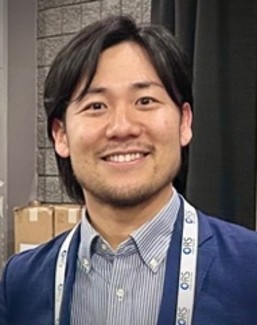
 Postdoctoral Fellow, Department of Anesthesiology,
University of Minnesota
Undergraduate Degree: Chiba University, Japan
Who do you consider your mentors?
I consider Dr. Laura Stone (University of Minnesota), Dr. Seiji Ohtori (Chiba University), and Dr. Daisuke Sakai (Tokai University) to be my mentors. They have each had a major influence on how I think about both research and clinical practice, and I am very grateful for their guidance. My goal is to follow in their footsteps and make an impact internationally, like they have.
What is your specific area of interest in research?
My main research interest is the mechanism of central sensitization in chronic low back pain. As a spine surgeon, I have treated a wide range of patients with low back pain, from athletes to older adults, including surgical cases. Through that experience, I became interested in the idea that low back pain is not simply caused by degeneration of the spine but also involves psychological factors and changes in the brain. That interest led me to basic research, where I hope to clarify the mechanisms and contribute to the development of new treatments.
What are you currently working on?
I am currently studying brain changes in a mouse model of chronic low back pain induced by intervertebral disc puncture. I am using neuroscience approaches, including viral vector–based circuit analysis and single-nucleus RNA sequencing, to better understand the underlying mechanisms.
What has been the biggest challenge for you lately in your research?
One of the biggest challenges for me recently has been adjusting to a new research environment in the United States. Before coming here, I was working in Japan as both a spine surgeon and a researcher. Since moving to the U.S. in the summer of 2025, I have been doing research while also continuing to improve my English.
What projects are you looking forward to?
I am especially excited about projects that help us better understand low back pain from the perspective of pain and the brain. I hope to clarify how brain circuits and molecular changes contribute to chronic pain and eventually connect those findings to better treatments for patients.
What changes would you like to see in the future of the orthopedic research community?
I would like to see stronger collaboration between orthopedics and neuroscience. In particular, I hope to see more research focused on pain, because pain is often the symptom that affects patients the most. I also hope to contribute to collaborations that can bridge basic research and clinical research, so that scientific findings can lead more directly to better patient care.
What do you like to do outside of your work?
Outside of work, I enjoy spending time with my daughters at parks near the lakes. Minnesota is known as the “Land of 10,000 Lakes,” so I really enjoy being outdoors with my family here.
What is the last book you read?
“The Painful Truth: The New Science of Why We Hurt and How We Can Heal” by Monty Lyman. It was a very good book for understanding the relationship between pain and the brain.
What is the most unusual or unexpected item sitting on your desk right now?
I have my certificate of the ORS Young Investigator Initiative program displayed on the wall by my desk. It motivates me every day to keep working hard and grow into a true young investigator.


Leave A Comment